
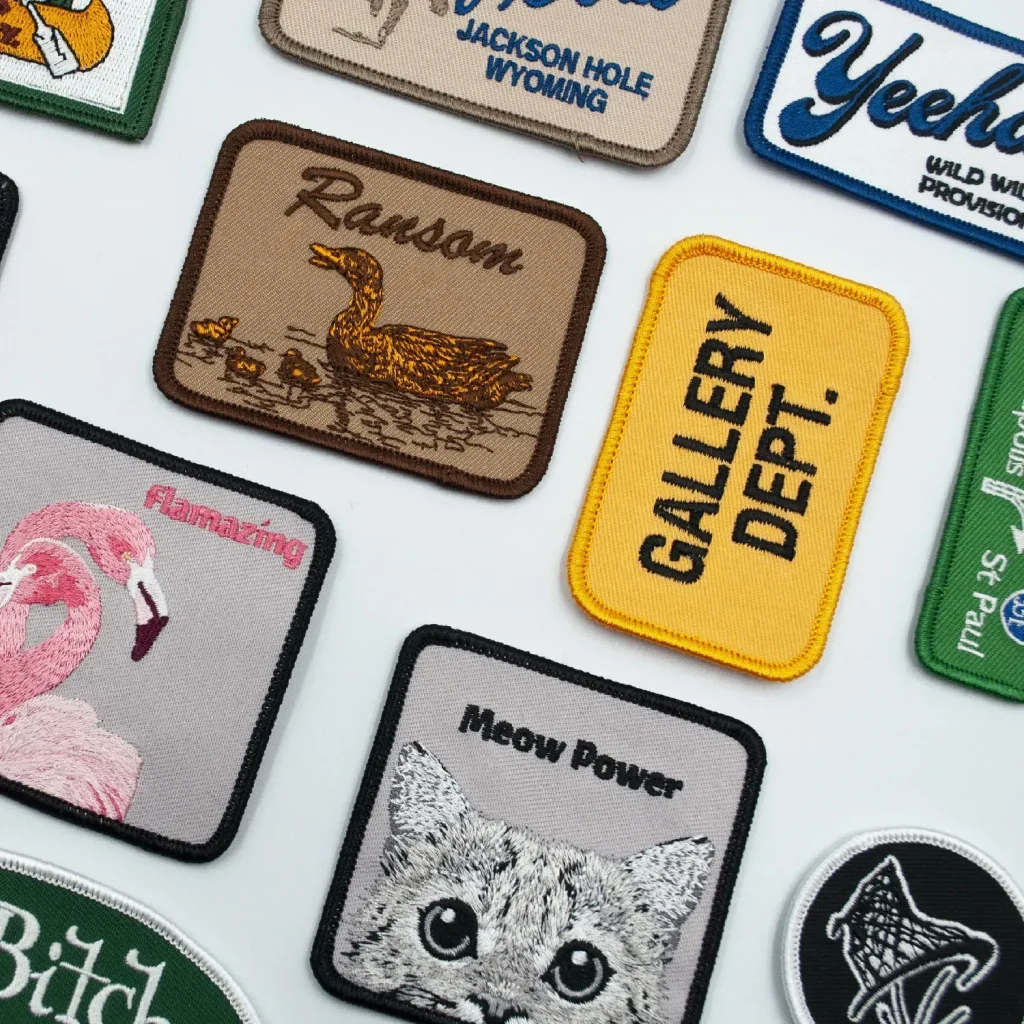
Embroidered Patches have evolved from simple embellishments into a versatile tool for personal expression, branding, and upcycling. Whether you’re decorating a denim jacket, backpack, or a brand collection, patches offer a durable, colorful, and easily changeable way to tell a story. This guide dives into the design process and practical steps for creating expressive patches, including insights on designing embroidered patches and how those stitches, backing, and finishes affect the final look. You’ll also find guidance on applying patches and ongoing maintenance, covering considerations like placement, stitching options, and durability across different fabrics. Finally, a clear comparison of iron on vs sew on patches helps you choose the right method for different fabrics and uses.
Beyond the term patches, these stitched fabric emblems serve the same purpose of storytelling and branding across garments, backpacks, and accessories. In marketing and design terms, you can think of embroidered badges, fabric patches, or sewn-on insignias as versatile visual anchors that add personality without permanent changes. This approach shares core principles with the patch process—color harmony, stitch density, backing choices, and edge finishing—while inviting exploration of alternative materials like felt or velour for texture. Designers often describe them as decorative embroidery marks, logo emblems, or wearable art, allowing teams to experiment with placement, scale, and repeat patterns across a collection. Whether used for personal style, event mementos, or corporate branding, these textile adornments offer removable, durable, and impactful ways to tell a story.
Designing Embroidered Patches: From Concept to Stitch File
Designing Embroidered Patches starts with a clear concept and a practical plan for size, shape, color, and messaging. This phase blends artistic vision with technical constraints, ensuring the final patch reads well from a distance and up close. When you approach designing embroidered patches, you’re not just choosing an image—you’re outlining stitch strategies, backing options, and edge finishes that will shape durability and appearance.
A well-prepared design considers stitch types, density, and underlay, because these decisions influence how the patch sits on fabric and how it will wear over time. The process often transitions from a sketch to a digitized stitch file, where decisions about satin stitches, fill stitches, and running stitches determine texture and depth. This design work lays the foundation for successful production and consistent color rendering in the final patch.
Choosing Backing and Finishing: How to Support Patch Application
Backing and finishing are the invisible drivers of how a patch will stay attached and look over time. A backing choice—whether heat-activated adhesives, iron-on backing, or sew-on backing—affects installation speed, fabric compatibility, and wash durability. Selecting the right backing is a crucial step in the process of creating patches that perform as intended on a given garment or item.
Finishing options like merrow edging and edge stitching contribute to the patch’s professional appearance and fray resistance. The backing not only anchors the design but also interacts with the garment’s care routine. When you think about backing and finishing together, you’re planning for longevity, secure attachment, and a clean silhouette that maintains definition after repeated wear and washing.
Iron-On vs Sew-On Patches: Pros, Cons, and Best Uses
Iron-On patches offer quick, convenient attachment for DIY projects and temporary applications. The heat-activated adhesive bonds to fabric with a press, making them ideal for first-time users or situations where professional sewing isn’t available. However, longevity can be impacted by high heat, repeated washing, or fabrics that don’t bond well with adhesive.
Sew-On patches, by contrast, require stitching to the fabric and typically deliver greater durability, especially on heavy-use items like backpacks or denim jackets. They work across a wider range of fabrics and can handle frequent washing. While sewing adds a step, the result is a more secure patch with fewer issues from heat exposure, making it a preferred choice for long-term branding and rugged wear.
Types of Embroidered Patches: A Quick Guide to Options
There are several common types of embroidered patches, each with distinct advantages. Sew-on patches provide durability and fabric versatility, while iron-on patches offer fast application for quick projects. Heat-seal patches use a heat-activated glue as an option that can combine ease of use with strong adhesion.
Additional variants include Velcro-backed patches for easy removal, and Velour-backed or felt-backed patches that influence weight and texture. Understanding these types helps you tailor patch selection to the garment, expected wear, and the desired aesthetic, ensuring the patch integrates well with the overall design.
Care for Embroidered Patches: Longevity Tips and Maintenance
Care for Embroidered Patches focuses on protecting color, stitching, and backing. Washing guidelines often suggest turning the garment inside out, using cold water, and choosing mild detergents to minimize thread fading. Gentle cycles help preserve the patch’s texture and edge integrity over time.
Drying and heat exposure also matter: air-drying is ideal, and if a dryer is used, selecting a low heat setting reduces the risk of adhesive breakdown or fabric distortion. Additional care steps include handling repairs early—re-stitching frayed edges and storing patches in a cool, dry place to maintain their shape and adhesion for future use.
From Design to Production: Patchmaking Process and Quality Control
From design concepts to production, the patchmaking journey emphasizes a structured workflow. Concept and approval, followed by digitizing artwork into stitch files, sets the stage for accurate color stops and stitch density. This phase mirrors the core idea of designing embroidered patches, translating creative intent into machine-ready instructions.
Sampling and production rounds ensure color accuracy, edge finish, and backing integrity before large runs. Quality control checks during production verify stitching consistency, backing adhesion, and edge finishing. The final finishing and packaging steps prepare patches for delivery, with attention to durability and presentation that aligns with the initial design intent.
Frequently Asked Questions
What exactly are Embroidered Patches and how does designing embroidered patches influence their final look?
Embroidered Patches are fabric patches with decorative stitching that can be heat sealed or sewn onto garments, bags, or hats. In designing embroidered patches, you control size, color contrast, stitch density and types (satin, fill, running), backing choice (heat activated adhesive, iron on, or sew on), and edging (merrow). These design choices influence readability, durability, and texture, helping a patch read well from a distance and match the base fabric.
What are the differences between iron on vs sew on patches for Embroidered Patches?
Iron on patches rely on a heat activated adhesive to bond to fabric, offering quick, temporary to durable options depending on material; however, heat and washing can weaken the bond on some fabrics. Sew on patches require stitching to the fabric, offering greater durability and compatibility with many fabrics, including heavy wear items.
How do you apply Embroidered Patches at home?
Position the patch where it is desired and mark the placement. Prep by preheating the garment for iron on or stabilizing the fabric for sewing. Attach by ironing the patch according to the instructions or by sewing around the edges with a tight backstitch or satin stitch. Finish by ensuring edges are secure and cool, and care by washing inside out in a gentle cycle.
What are the main types of embroidered patches and where does each work best?
Types of embroidered patches include sew on patches, iron on patches, heat seal patches, Velcro backed patches, and Velour backed patches. Sew on patches are durable and versatile; iron on patches are convenient for quick applications; heat seal patches provide strong adhesion; Velcro backed patches allow easy removal; Velour backed or felt backed patches affect weight and texture.
How should you care for Embroidered Patches to keep them looking vibrant?
Care for embroidered patches by turning garments inside out and washing in cold water with a mild detergent; avoid bleach. Air dry when possible; for iron on patches, follow the instructions and avoid direct heat on the patch; for sew on patches, avoid aggressive ironing over the patch. Store patches in a cool, dry place and reattach with a secure stitch if needed.
What should brands consider in designing embroidered patches for a collection or product line?
When designing embroidered patches for a collection, consider patch size for legibility, color contrast with the garment, stitch density and types for durability, backing and finishing options, production turnaround, and color matching to ensure consistency across a large run.
| Topic | Key Points |
|---|---|
| What are Embroidered Patches? | Pieces of fabric with decorative stitching designed to be affixed to clothing and textiles. Offer raised texture and depth; can be pre-cut with backing or produced as hot-stitch patches with merrowed edges for a clean finish. |
| Why Designers Choose Embroidered Patches? | Scalable, removable branding or messaging without permanent changes. Useful for milestones, retro aesthetics, or subtle garment accents. Design flexibility includes color, shape, shading, and stitch count effects on look and durability. |
| Designing Embroidered Patches: Key Considerations | Size and legibility; high-contrast color choices; various stitch types and density; suitable backing and finishing (e.g., merrow edging); planning digitizing to ensure clean silhouettes and reduced thread breaks. |
| Backing and Application Methods | Backings include heat-activated adhesives, iron-on, and sew-on. Applies to garments with iron-on being quick and convenient but potentially less durable; sew-on offers broader fabric compatibility and greater durability. |
| Iron-On vs Sew-On Patches | Iron-on: heat-activated bond; fast and easy for DIY; may wear with washing. Sew-on: stitched to fabric; more durable, suitable for heavy-use items and diverse fabrics. |
| How to Apply Embroidered Patches: Step-by-Step | 1) Position the patch precisely; 2) Prep fabric (and stabilizer if sewing); 3) Attach (heat and pressure for iron-on, or stitching for sew-on); 4) Finish and secure edges; 5) Follow care guidelines to preserve bond. |
| Types of Embroidered Patches | Sew-on, Iron-on, Heat-seal, Velcro-backed, Velour-backed or felt-backed patches. |
| From Design to Production: The Patchmaking Process | Concept/approval → Digitizing → Sampling → Production → Finishing and packaging, with quality control at each stage. |
| Care for Embroidered Patches: Longevity Tips | Wash inside out in cold water; air-dry; avoid direct heat on patches; store patches properly; re-stitch or reattach if edges fray. |
| DIY vs Professional Production | DIY and home embroidery suit small runs and experimentation; professional patch manufacturers are better for consistency, large orders, and value-added services. |
| Practical Ideas & Inspiration | Personal branding, event memorabilia, upcycling, and thematic collections built around motifs, logos, or storytelling elements. |
