
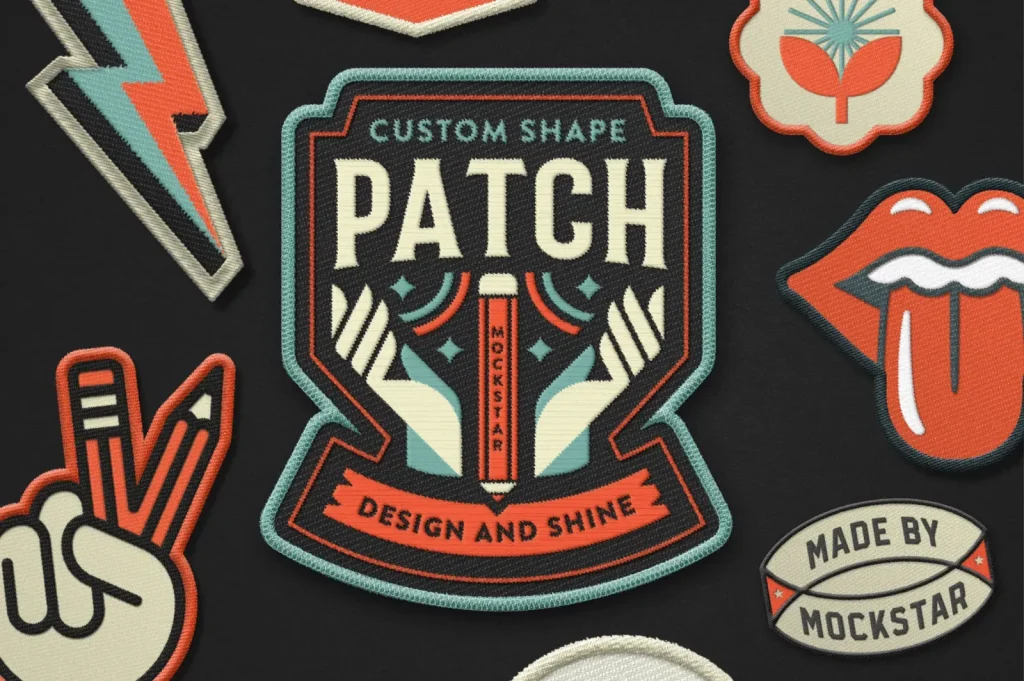
designing custom patches is more than a badge on fabric; it functions as a portable brand ambassador that travels with your customers, opening conversations about quality, craftsmanship, and your brand story wherever the wearer goes, whether in a store, at an event, or online. When you choose the right texture, backing, and finish, embroidered patches really do become walking billboards that communicate your values and help create a consistent customer experience across apparel, bags, accessories, and promotional items, reinforcing recognition across retail shelves, social feeds, and everyday outfits. A thoughtfully designed patch elevates an ordinary item into a statement piece, inviting closer inspection of color, silhouette, and the tiny details that reveal your brand’s personality while remaining legible at small sizes, durable through laundering, and adaptable across different product lines. In this guide, you will learn how to translate branding goals into patch-ready artwork, select materials with care—from threads to backing to edge finishing—and map a production path that keeps your patch portfolio aligned with marketing calendars and seasonal campaigns. By covering fundamentals from shape and size to color management and production considerations, this overview helps you move from concept to finished patches while keeping your core messaging cohesive across channels, formats, and partnerships.
Viewed from a different angle, fabric badges or brand insignias act as tactile identifiers that reinforce loyalty and recognition across products and experiences. This approach resonates with concepts like badge aesthetics, textile logos, and patch craftsmanship, which align with supply chain realities and consumer expectations. Rather than a single logo, you shape a family of patches—signifiers that travel across apparel, packaging, and digital touchpoints—to create a cohesive brand language. By considering embedding methods, thread counts, backing options, and color consistency, you ensure the emblem program remains scalable and aligned with broader branding strategies.
The Strategic Value of Patches in Branding
Patches act as tactile brand assets that customers can see, touch, and wear. They extend your brand identity beyond a logo, turning apparel into mobile marketing that speaks to quality, values, and personality. Using patches for branding leverages the same color systems and typography you use in other channels, reinforcing consistency across product lines and campaigns.
Across ecommerce, streetwear, corporate teams, and events, patches help build recognition. A well-designed patch creates a cohesive visual language that threads through packaging, social media, and retail displays, making branding with patches a practical tool.
Designing custom patches: from concept to production
Define the brand mood and patch purpose. Is the patch a membership badge, an award, or a product line indicator? Clarify the story your patch is telling and how the audience will interpret it. This is the core of designing custom patches.
Gather assets: vector logo, color palette, typography rules. If the logo is complex, create a simplified badge version that still reads at small sizes. This is a key part of logo patches design.
Patch design basics: shape, size, and color management
Choose a patch type and shape that echo your logo and brand story: circles, ovals, shields, badges. Typical sizes range from 1 to 4 inches. Keep the design legible and production-friendly by simplifying complex marks, which aligns with practical patch design tips.
Color management matters; use Pantone colors to ensure consistency across lots. Limit colors, use solid fills and crisp outlines, and consider backing and edge finishes. Embroidered patches offer a classic, premium look, while woven patches provide finer detail with a flatter surface.
Material options and production realities: embroidered, woven, and PVC patches
Embroidery versus weaving defines texture and durability. Embroidered patches give a tactile, classic finish, while woven patches emphasize finer detail with a smoother surface. PVC patches deliver bold visuals with weather resistance and a modern edge.
Finish and backing choices complete the look: merrowed or laser-cut edges, iron-on, sew-on, or Velcro backings. Each option influences wearability and price, so choose materials and backing to balance durability, use case, and investment.
Color, branding, and cohesion: logo patches design and patch design tips
Maintaining color fidelity across products requires a consistent color system, clear artwork, and careful material selection. The logo patches design should reflect your brand’s typography, palette, and voice, ensuring a cohesive patch portfolio.
Apply patch design tips to balance detail and practicality. Limit the number of colors, test on representative fabrics, and use mockups to preview on apparel. This approach helps patches feel intentional and aligned with broader branding with patches.
From prototype to scale: production, MOQs, and rollout
Production specs matter: provide vectors, color codes, size, shape, edge type, backing, and quantity. Prototyping lets you verify color accuracy and edge quality before mass production, reducing surprises in large runs.
Roll out across campaigns with coordination across packaging, product photography, and retail displays to reinforce your patch portfolio. Consider limited editions for events or product drops to test market response and expand your branding with patches over time.
Frequently Asked Questions
What is the best process for designing custom patches for branding?
When designing custom patches for branding, start by defining the patch’s mood and purpose, then gather vector logos and color palettes. Choose the patch type, shape, and size, and translate the logo into a patch-friendly version using solid fills and clean outlines. Prepare production specs, test with a prototype, and refine until it aligns with your brand. This structured approach embodies core patch design tips and ensures consistency across products.
How do embroidered patches compare to woven patches in patch design tips for different use cases?
Embroidered patches deliver a classic, premium look with strong texture and durable edges, making them ideal for bold logos and larger patches. Woven patches offer finer detail and a flatter finish but can blur complex imagery at small sizes. For logo patches design, consider the use case, garment, and budget; use merrowed edges for a crisp silhouette, and keep artwork simple for embroidery at small sizes. These patch design tips help balance detail, legibility, and cost.
Which factors matter most in logo patches design when designing custom patches for branding?
Key considerations include legibility at typical patch sizes, so start with a simplified logo version for embroidery. Use Pantone color matching to ensure consistent hues across lots, and lock in shape, size, and edge type early. Decide on a backing (iron-on, sew-on, or Velcro) based on wear, and choose a patch style (embroidered, woven, or PVC) that fits your brand tone.
What backing options and materials should be considered when designing custom patches for branding to ensure durability?
Backings should match the intended wear—iron-on for quick application, sew-on for durability, and Velcro for removable use across items. Choose patch materials (embroidered, woven, or PVC) and edge finishes that suit your brand and budget. Consider fabric compatibility and washing durability, and request a sample to validate wear performance before large orders.
How can you maintain consistent color and branding with patches using Pantone matching in patch design tips?
Pantone matching is essential to maintain consistent branding across all patches. Limit the color count to simplify embroidery and reduce variation, select thread colors that map to your brand palette, and request proofs to confirm color accuracy before production. Use solid fills and crisp outlines to support reliable color reproduction, a core patch design tip.
How can patches leverage branding with patches across products and events to create a cohesive brand identity?
Patches reinforce a cohesive brand identity when used across apparel, bags, event collateral, and packaging. Create a patch family centered on a core logo patch, with seasonal or limited-edition variants to maintain interest. Apply patches consistently to boost recognition and support merchandising while aligning with the broader branding with patches strategy.
| Aspect | Key Points | Notes / Examples |
|---|---|---|
| Patch purpose | Patches act as portable brand ambassadors, turning wearers into walking billboards that reinforce identity across products and channels. | Build a cohesive visual language spanning apparel, packaging, and digital presence. |
| Design basics | Shape, size, material, embroidery vs woven, backing, color management; Pantone matching; typical size 1–4 inches; simplify complex logos for legibility; merrowed edge for durability. | Backings: iron-on, sew-on, Velcro; ensure color consistency across production lots. |
| Step-by-step process | Define mood & purpose; gather assets; choose patch type and backing; determine size/shape; create clean artwork; manage color; prepare production specs; prototype; finalize & scale. | Focus on brand alignment and practical costs; references to logo patches design and branding with patches. |
| Production considerations | Material choice, thread count, backing type, edge finish; embroidered vs woven vs PVC; backing effects wear; MOQs and lead times; test samples. | Plan for proofs and manufacturing realities; ensure patch performance on target fabrics. |
| Brand ecosystem | Patches reinforce identity across merchandise, packaging, and marketing; help with recall and create collectible moments; align with brand voice and values. | Designed to support a cohesive brand narrative and merchandising strategy. |
| Practical applications | Appear on jackets, backpacks, hats, tote bags, or packaging inserts; create patch families with core/logo plus seasonal variants; use patch campaigns for engagement. | Seasonal patches and limited editions can boost promotions without altering core branding. |
