
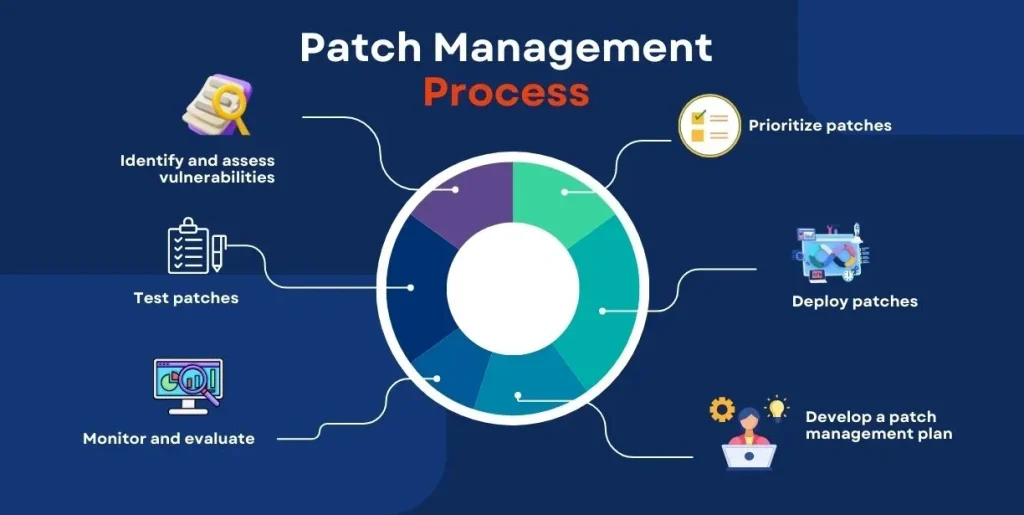
Patch management sits at the heart of modern IT operations, guiding how organizations stay secure and resilient. As software patches are released by operating system vendors, application developers, and third parties, Patch management coordinates timely evaluations and deployment across diverse environments. A disciplined approach reflects industry best practices for patching, reduces the risk of unpatched endpoints, aligns with vulnerability management goals, and supports compliance through auditable records. Modern patching programs leverage automated patching to speed delivery, minimize manual error, and apply security updates across devices, servers, and cloud workloads. By coordinating discovery, testing, deployment, and monitoring, this lifecycle keeps systems up to date while preserving uptime.
Equivalently, many teams describe this work as update governance or vulnerability remediation, focusing on rapid, controlled fixes that shield assets. From a broader vantage point, the practice covers software patches, security updates, and configuration drift across endpoints, servers, containers, and cloud services. Automation, continuous monitoring, and risk-based prioritization help close exposure quickly while minimizing operational impact. Viewed through the lens of patch management best practices, a continuous lifecycle of discovery, assessment, testing, deployment, and verification aligns security with reliability and compliance.
Understanding Patch Management in Modern IT Operations
Patch management is the disciplined lifecycle that organizations use to keep software up to date. It covers discovering installed hardware, operating systems, applications, and dependencies, evaluating patches for relevance, testing for compatibility, deploying updates, and verifying success. By focusing on software patches as a continuous capability, teams reduce exposure to known vulnerabilities and improve system reliability.
In modern IT operations, patch management integrates with asset inventories, vulnerability scanning, and change control to minimize disruptions. It requires cross-functional coordination among security, IT operations, and compliance teams to prioritize patches based on risk and business impact, not just release dates.
The Critical Role of Software Patches for Security and Compliance
Software patches address critical vulnerabilities and defects that attackers commonly exploit. Regular patching strengthens defense by applying security updates promptly, reducing the window of exposure. Emphasizing the role of patches in safeguarding data, uptime, and reputation helps align IT teams with risk reduction goals.
Beyond security, patching supports compliance frameworks that mandate demonstrable controls and timely remediation. A robust patch program provides auditable evidence of due diligence and risk reduction, helping organizations meet regulatory requirements and pass audits with confidence.
Integrating Patch Management with Vulnerability Management
Patch management and vulnerability management work hand in hand. Scanners identify missing patches and CVEs, while patch deployment closes the gaps with tested updates. This collaboration creates a closed-loop process that minimizes exposure and accelerates remediation.
Organizations should synchronize vulnerability assessments with patch rollout plans to avoid false positives and ensure that remediation aligns with business priorities. Integrating threat intelligence, risk scoring, and asset context supports smarter, faster decision making.
Patch management Best Practices for Enterprise Environments
To scale patching, enterprises should implement asset hygiene, centralized patching, staged deployments, and clear change control. These patch management best practices help teams stay ahead of risk while preserving service availability. Regular reviews of inventory accuracy and dependency mapping are essential components.
Automated patching plays a central role, but governance remains essential. Define roles, maintenance windows, rollback criteria, and metrics to measure success across endpoints, servers, and cloud workloads. A documented policy framework ensures consistency, accountability, and continuous improvement.
Automating Patching: From Manual Updates to Automated Patching
Automation accelerates remediation by identifying applicable patches, testing them in a staging environment, and deploying across large fleets with minimal downtime. Automated software updates reduce manual effort and the risk of human error, enabling faster reaction to new threats.
In practice, automated patching integrates with vulnerability management to close exploitable gaps quickly, and it supports secure configurations in CI/CD pipelines and cloud-native deployments. This approach helps ensure that security updates are consistently applied across diverse environments.
Patch Management in Cloud, Virtualization, and Container Contexts
Cloud workloads and containerized apps introduce new challenges and opportunities for patching. Automated image scanning, base image refreshes, and container image updates help ensure security updates reach running services. Patching strategies must account for ephemeral instances and distributed deployments.
Management cadences must adapt to ephemeral environments, with policies for patching containers, VM instances, and serverless components while preserving compatibility and performance. Clear governance around image lifecycles and dependency management supports reliable, scalable patching in hybrid environments.
Prioritizing Patches: Risk-Based Approaches and Impact Analysis
Prioritization starts with vulnerability severity scores, exploit trends, and business impact. Focusing on vulnerabilities actively exploited in the wild helps align patching with risk appetite. A structured approach ensures critical systems receive timely attention and reduces unnecessary work on low-risk patches.
A risk-based approach leverages CVSS, asset criticality, and exposure context to determine order of deployment, balancing speed with rigorous testing. This method supports efficient use of resources while maintaining strong protection against high-severity threats.
Compliance, Auditing, and Governance Through Patch Management
Patch management contributes to audit readiness by recording patch status, remediation actions, and risk reductions. Dashboards demonstrate ongoing security controls and regulatory alignment, making it easier for auditors to verify due diligence.
Governance requires documented policies, defined roles, approval workflows, and maintenance windows. Regular reviews of patch management practices ensure adherence to standards, improve visibility, and sustain continuous improvement across the organization.
Measuring Success: Metrics, Monitoring, and Reporting for Patches
Key metrics track deployment time, success rates, rollback frequencies, and remediation progress against vulnerability targets. Continuous monitoring helps detect incomplete installs and misconfigurations, enabling rapid remediation and ongoing improvement.
Reporting across IT leadership and auditors provides visibility into risk reduction, compliance posture, and the effectiveness of automated patching and patch management processes. Data-driven insights support strategic decisions and resource alignment.
Overcoming Common Challenges in Patch Management Programs
Organizations often face patch fatigue, legacy devices, and offline systems that complicate timely remediation. Establish scalable, automated workflows and risk-based prioritization to manage workload while preserving service levels.
Investments in testing environments, change control, and clear patch policies help reduce false positives and rollout failures, ensuring patching does not become a bottleneck. Ongoing training and executive sponsorship are also crucial to sustaining a mature patch management program.
Frequently Asked Questions
What is patch management, and how does it support vulnerability management and security updates?
Patch management is the lifecycle of identifying, testing, deploying, and verifying software patches across an IT estate. It complements vulnerability management by closing exploitable gaps quickly, reducing exposure to threats, and ensuring security updates reach endpoints, servers, and cloud workloads with minimal disruption.
What are patch management best practices to minimize risk and downtime?
Key patch management best practices include maintaining an accurate asset inventory, using vulnerability management to prioritize patches based on risk, automating patch deployment, and enforcing change control. Implement testing and staged rollouts, define a clear patch management policy, and tailor strategies for endpoints, servers, containers, and cloud workloads.
How does automated patching fit into a modern patch management program?
Automated patching accelerates remediation by automatically discovering applicable patches, deploying updates, and enforcing reboot checks across large environments. It strengthens vulnerability management by reducing exposure windows and works across on-premises, cloud, and hybrid setups with automated patching workflows.
Why should organizations distinguish between security updates and feature patches in patch management?
Distinguishing security updates from feature patches helps prioritize remediation where it matters most—security updates reduce risk from actively exploited vulnerabilities, while feature patches may be scheduled with longer horizons. Incorporate this distinction into risk-based prioritization and patch management policy.
How does patch management help with compliance and audit readiness?
Patch management provides auditable evidence of due diligence by documenting patch status, remediation actions, and risk reductions. Regular reporting and dashboards support regulatory requirements and strengthen governance, dovetailing with vulnerability management and security update tracking.
What are the key steps in the patch management lifecycle from discovery to verification?
The lifecycle starts with discovery and inventory, then risk assessment and prioritization, followed by testing and staging, scheduled deployment, post-deployment verification, and ongoing monitoring and reporting. Each step aligns with vulnerability management goals and ensures patches are applied reliably across the IT estate.
| Topic | Key Points |
|---|---|
| What is Patch Management? | Lifecycle: identify missing patches, assess risk, test for compatibility, and apply patches across devices, servers, cloud instances, and containers. It’s broader than updates; it’s a lifecycle that includes discovery, prioritization, deployment, monitoring, and reporting. Integrates with vulnerability management to close gaps quickly while minimizing disruption. |
| Why Patch Management Matters | Security: patches fix critical vulnerabilities; Compliance: regulatory evidence; Stability: fixes defects; Cost efficiency: reduces downtime and total cost of ownership. |
| Patch Management Lifecycle | Discover & Inventory; Assess Risk & Prioritize; Test & Staging; Schedule & Deploy; Verify & Monitor; Document & Report. |
| Best Practices | Asset hygiene; Prioritization aligned with vulnerability management; Automation; Testing & change control; Patch management policy; Environment-specific strategies; Security updates vs feature patches; Metrics & continuous improvement. |
| Challenges | Patch fatigue/resources; Legacy/offline systems; Testing bottlenecks; False positives. |
| Role of Automation | Automation enables patch retrieval, applicability checks, deployment across endpoints, reboot management, and CI/CD integration; reduces exposure window. |
| Real-world Considerations | Financial services case: centralized program; reduced time-to-patch from days to hours; improved audit readiness. Tech startup: container and cloud-native automation; patches in CI/CD; reduced risk from vulnerable images. |
Summary
Conclusion: Patch management is a continuous, strategic process that ensures patches are discovered, evaluated, tested, deployed, and verified in a timely and controlled manner. By adopting patch management best practices, organizations strengthen vulnerability management, reduce exposure to security threats, and maintain higher system stability and compliance. Automation and robust patch management policies enable teams to scale remediation, manage risk more effectively, and deliver secure software experiences across on-premises, cloud, and hybrid environments. In short, regular patch management keeps your systems secure, and a well-executed patching program becomes a cornerstone of resilient IT operations.
