
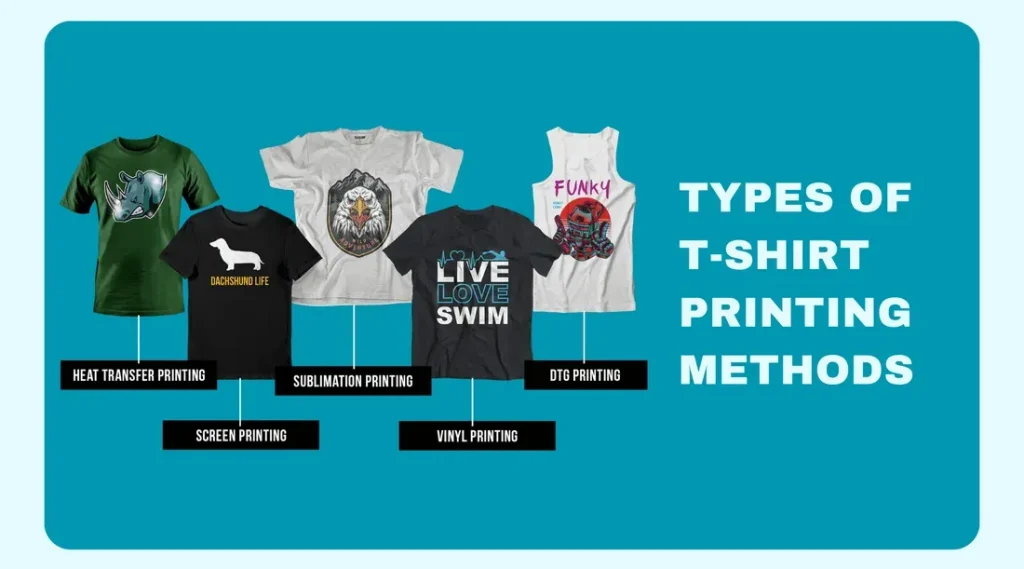
Printing methods for custom shirts shape how your designs come to life, influencing not only appearance but durability, washability, colorfastness, and the costs associated with scale, timing, and production planning across multiple orders, seasonal campaigns, and long-range programs. DTG printing offers excellent color depth and a soft hand on cotton-rich fabrics, making it a strong option for art-heavy designs that demand smooth gradients, subtle shading, and accurate reproduction of complex imagery, even on lower-contrast garment colors, where the look remains faithful after multiple washes. For large volume runs, traditional screen printing provides durability and cost effectiveness by applying ink in thick, consistent layers, while alternative approaches may suit smaller batches, specialty inks, or unconventional garment shapes that require flexible application methods and easy color changes between designs. Understanding fabric compatibility helps you select a method that preserves vibrancy across cotton, blends, moisture-wicking performance textiles, or recycled fibers, ensuring the result looks right on your chosen garment and holds up to laundering cycles without significant color migration or hand feel deterioration. A practical framework ties order size, artwork complexity, and budget to the best fit, guiding decision-makers to navigate trade-offs, plan production milestones, and deliver consistent quality that aligns with brand standards, customer expectations, and a reliable go-to process.
From a broader content view, this topic can be framed in terms of garment decoration strategies, including direct-to-fabric inks, transfer-based graphics, embroidery accents, and all-over dye processes. Brand and product teams often evaluate these options by factors such as texture, color fidelity, wash durability, setup time, and total cost, rather than by a technical method name alone. In practice, many projects blend multiple approaches to balance detail with efficiency, tailoring decoration strategies to fabric type, garment style, and the target audience. For readers comparing options, the conversation shifts toward practical criteria like batch size, fabric performance, lead time, and the balance between vibrant imagery and tactile feel.
Printing methods for custom shirts: A quick framework to pick the right option
Choosing the printing method for a custom shirt project starts with clear goals: order size, design complexity, fabric, and budget. The main options—DTG printing, screen printing, and heat transfer—each excel in different scenarios. By framing your project around these factors, you can balance quality, cost, and speed while staying aligned with your brand. This approach aligns with the broader idea of evaluating custom shirt printing methods to find the right fit for your needs.
A practical decision framework helps you match your design to the production method. For example, on-demand runs with rich color detail may benefit from DTG printing, while large-volume orders with bold logos tend to lean toward screen printing. Consider fabric compatibility early, and don’t shy away from a mixed-methods approach to optimize color, texture, and durability across your line—this is where understanding custom shirt printing methods becomes especially valuable.
DTG printing: When color richness and fine detail deserve a soft hand
DTG printing sprays specialty inks directly onto the fabric, delivering highly detailed, photo-quality designs with a soft hand feel. It shines for gradients, subtle color shifts, and artwork that would require extensive color separations with traditional screen printing. The method is particularly suitable when you want vivid color on cotton-rich fabrics without the heaviness of thick ink layers.
However, there are caveats to consider. Cost per unit can be higher than screen printing for larger quantities due to ink use and maintenance. White ink underbase and fabric color can affect vibrancy on dark fabrics, sometimes requiring pretreatment or post-processing. Best results typically come from 100% cotton or high-cotton blends, with performance on synthetic fabrics varying by formulation and process. This informs decisions about fabric compatibility when choosing DTG.
Screen printing: Durable, high-volume color for bulk orders
Screen printing has long been a backbone of apparel production, delivering bold color and durability at scale. By using screens to lay down ink layer by layer, it remains an economical choice for large runs, especially when a design uses a limited color palette. In addition to durability, screen printing often provides excellent color fastness and can be adapted to a wide range of fabrics—from cotton to blends—and even certain polyesters when done correctly.
Practical considerations include higher upfront setup costs for screen creation and color separations, which can slow smaller orders. The method is most cost-effective for designs with few colors, as each color typically requires a separate screen. While highly versatile, some delicate or highly stretchy fabrics may require alternative methods to preserve feel and stretchability, which is where choosing the right custom shirt printing methods matters.
Heat transfer: Flexible, fast setups for small runs and on-demand customization
Heat transfer encompasses a family of methods that apply designs with heat, including iron-on vinyl, transfer films, and sublimation for polyester fabrics. This category offers flexible, fast setup and is forgiving for small runs or one-off pieces. It’s particularly useful for complex, multi-color designs and allows easy iteration when you need quick proofs or on-demand variations.
Trade-offs include a heavier or stiffer hand feel with vinyl-based transfers and potentially lower durability if pressing or inks aren’t applied correctly. Sublimation is limited to polyester or polymer-coated fabrics and requires care to avoid color loss on cotton blends. Overall, heat transfer often provides the fastest path to production for small batches or rapidly changing designs, complementing other methods in a mixed strategy.
Other methods to consider: Embroidery, Sublimation, and Direct-to-Film (DTF)
Beyond the big three—DTG printing, screen printing, and heat transfer—there are additional methods worth knowing. Embroidery adds a premium look for logos on polos or caps and tends to be very durable, though it’s less suitable for large photographic designs. Sublimation excels on all-over color on polyester fabrics, delivering vibrant, soft results that are excellent for performance apparel.
Direct-to-Film (DTF) combines some advantages of DTG and film-based transfers and is increasingly used for complex designs on a variety of fabrics. Each method brings its own fabric compatibility considerations and cost structure, so coordination with your design goals and production timeline is essential. This helps ensure you select the right mix of custom shirt printing methods for your project.
Fabric compatibility and color strategy: Matching method to fabric for best results
Fabric choice dramatically influences which method will perform best. Cotton fabrics typically respond well to DTG printing and screen printing, offering rich color detail and strong durability in many cases. 100% cotton tees often provide the best balance of color fidelity and feel, while polyester fabrics are more forgiving for sublimation’s all-over color strategies.
When planning color strategy and order size, compatibility with the chosen method is key. Large-volume runs with many colors can be most cost-effective using screen printing, whereas detailed, gradient-heavy artwork may benefit from DTG printing. For rapid customization with varying colors or names, heat transfer can provide a fast path to production. In all cases, align fabric compatibility, color count, and production timeline with your chosen custom shirt printing methods to achieve optimal results.
Frequently Asked Questions
What are the main printing methods for custom shirts, and when is DTG printing the best choice?
Key printing methods for custom shirts include DTG printing, screen printing, and heat transfer. DTG printing is ideal for detailed, photo-quality artwork on light to mid-tone cotton fabrics, with a soft hand feel and quick setup for small runs. Use DTG when artwork has gradients or many colors and you need on-demand production, but anticipate higher per-unit costs on large volumes and consider white underbase effects on dark fabrics.
How does screen printing compare to other printing methods for custom shirts and the broader landscape of custom shirt printing methods?
Screen printing offers exceptional value on large runs and strong color durability, making it a staple in many custom shirt printing methods. It has higher upfront setup (screens and color separations) but low per-unit cost with volume. It works on many fabrics but delicate or highly stretchy textiles may need alternatives. Best for bold single-color or limited-color designs and large print areas.
What should I know about heat transfer within the context of custom shirt printing methods?
Heat transfer includes vinyl and sublimation transfers and provides fast setup and flexibility for small runs and multi-color designs. It can deliver sharp details, but the hand feel can be heavier, and durability may be lower than DTG or screen printing if not applied correctly. Sublimation is ideal for all-over color on polyester and polymer-coated fabrics, while other transfers work across many fabrics but may crack or peel with washing.
Which fabrics are best suited to different printing methods for custom shirts, and how does fabric compatibility influence the choice?
Fabric compatibility drives method choice: 100% cotton tends to perform very well with DTG and screen printing, delivering excellent color and durability. Cotton-poly blends can work with most methods but may require pretreatment for DTG. 100% polyester is often best for sublimation to achieve vibrant, all-over color; DTG on polyester blends can work on light fabrics but may differ in hand feel. Always test to confirm.
Can I mix printing methods for a single order of custom shirts, and why would I do so?
Yes. A mixed approach can optimize cost, speed, and design fidelity. Use screen printing for large volumes of bold logos, DTG for detailed, photo-style artwork on a subset, and heat transfer for on-demand names or small variations. Coordinating methods with fabric, color count, and turnaround helps balance quality, cost, and lead times.
What care and wash considerations should guide your choice among printing methods for custom shirts?
Care and wash guidelines impact the long-term look of each method. For DTG and most transfers, prewash garments and wash cold, turn inside out, and avoid harsh detergents. Screen-printed inks are typically highly durable but require proper curing. Sublimation prints on polyester hold up well with cold washes. Providing clear care instructions helps customers preserve color and print life, regardless of the method.
| Topic | Key Points |
|---|---|
| DTG Printing (Direct-to-Garment) |
|
| Screen Printing (Silkscreen) |
|
| Heat Transfer (including vinyl and sublimation) |
|
| Other Printing Methods to Consider |
|
| Fabric and Color Considerations |
|
| Cost Considerations and Turnaround |
Turnaround times vary by shop; DTG can produce proofs and short runs quickly; screen printing may require lead time for screens and curing; heat transfers can be fastest for very small batches. When deadlines matter, discuss timelines with your supplier and consider a mixed approach (e.g., bulk screen printing with DTG for limited editions). |
| Quality, Washability, and Long-Term Performance |
|
| Practical Decision Framework |
|
Summary
Table presents a concise overview of the main printing methods for custom shirts and related considerations to help guide choices based on design, quantity, fabric, and budget.
